
Portugal
Attending the “Always Ready” event (and some touring on the side)
NOTE: Top-10 List – Practical Travelling Tips at bottom of page
(November 2024)
Catharine and Andrew decided to attend this 5-6 day event in Portugal while also taking in some sights during other days. Flying into Lisbon, they stayed the night in the city before grabbing a rental car and heading north to Nazare along the coast about an hour and a half way. Staying there for the night, they returned back to Lisbon the following day and stayed there for the night again. The following morning, they headed south on a three-hour trip to Lagos where the event was being held.
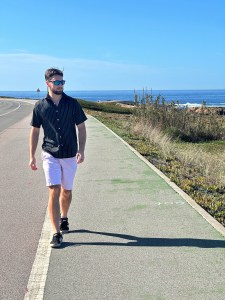
(Andrew checking out some sights)
As the event got rolling, they both were impressed with the Denning Family (mom, dad, seven kids) who’ve lived a life of adventure in over 60 countries so far. (you’ll find lots of information with a Google search on the family) The beach house where they stayed was communal in nature – many (if not all) the attendees of the event lived and ate together. Lots of healthy, organic meals ! Catharine mentioned how impressed she was with the involvement amongst the Denning Family kids – always there to help out and handle things.
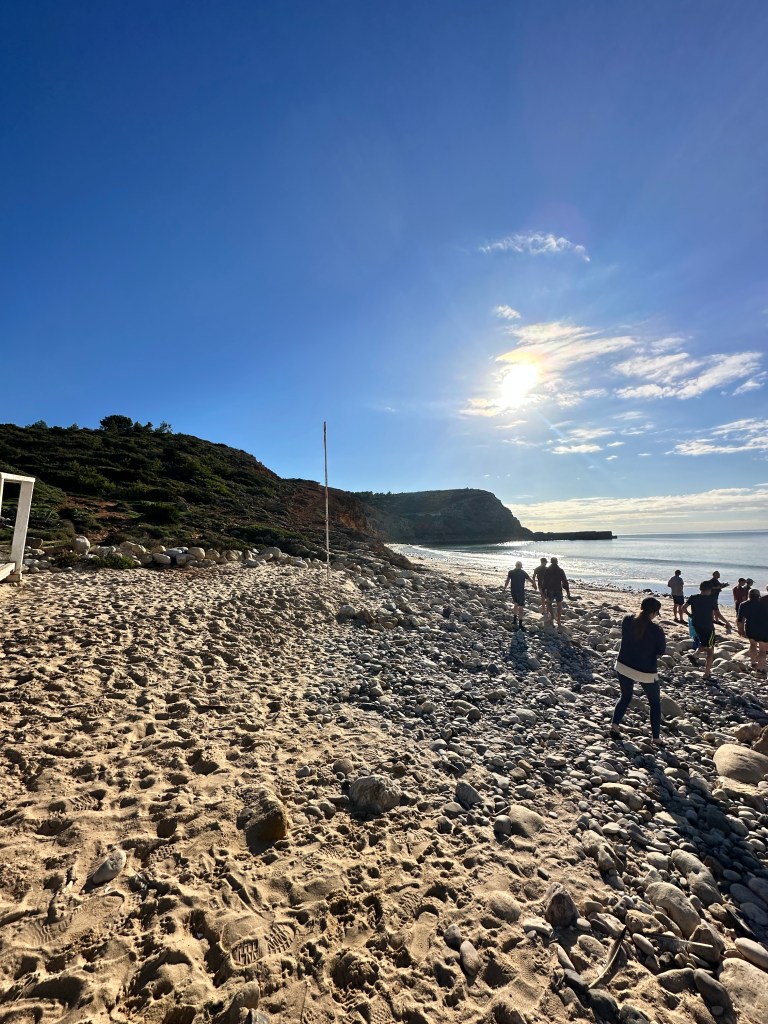
(Catharine taking in a beautiful coastal view)
The event is all about making yourself an “Asset” to yourself, your family, and to humanity. It’s called “Always Ready” for good reason – it involves the following

training areas: (below is from the Denning Family website link “extraordinary life – asset training“)
(more pictures from Catharine & Andrew’s trip at bottom)
Basic Medical Knowledge
Anatomy & Physiology
Body parts
Basic injury and disease processes
Basic First Aid & Emergency Medicine
Emergency scene management & patient assessment
Airway management
Recognizing & managing trauma — circulation & shock, catastrophic bleeding, etc.
Recognizing and managing medical emergencies in pre-hospital care
Basic Wilderness Medicine
Medical emergency simulations and scenario practice
Situational Awareness & Prevention
Situational awareness to prevent dangerous situations
Basic personal safety & security skills
Permissive vs. Non-permissive environments (what they are and why they matter)
Understanding typical and A-typical violence and it’s role and usage
Kim’s Games simulations to develop memory, awareness, and attention to detail
Self-Defense Combatives
Identifying violent & non-violent options for self-defense
Hands-only combative training
Weapons-based combative training and strategies
Mental resilience – Utilizing your most valuable weapon (your mind)
Improvised Weapons
Blunt vs. stabby
Every day objects as weapons
Airport security ‘approved’ weapons
Functional Fitness & Self-Rescue Training
PRACTICE in a safe envrionment
Self-rescue skills – lock picking, handcuffs, zip ties, duct tape
Exercises for functional fitness
Survival mindset & mental resilience (with case studies)
Scenario (simulation) based skills tests
Basic Travel Preparedness
Travel preparedness packing
On the ground improvisation
Airline approved tools & ‘weapons’
Build your own medical first aid kit (Level 1)
Preparedness travel tips
Philanthropy & Leadership
Purpose-based travel
Asset-based leadership skills
Human trafficking prevention
Mindful tourism

Simulation/Scenario Based Testing
Practice scenarios
Classes & case studies
Simulation-based skills testing
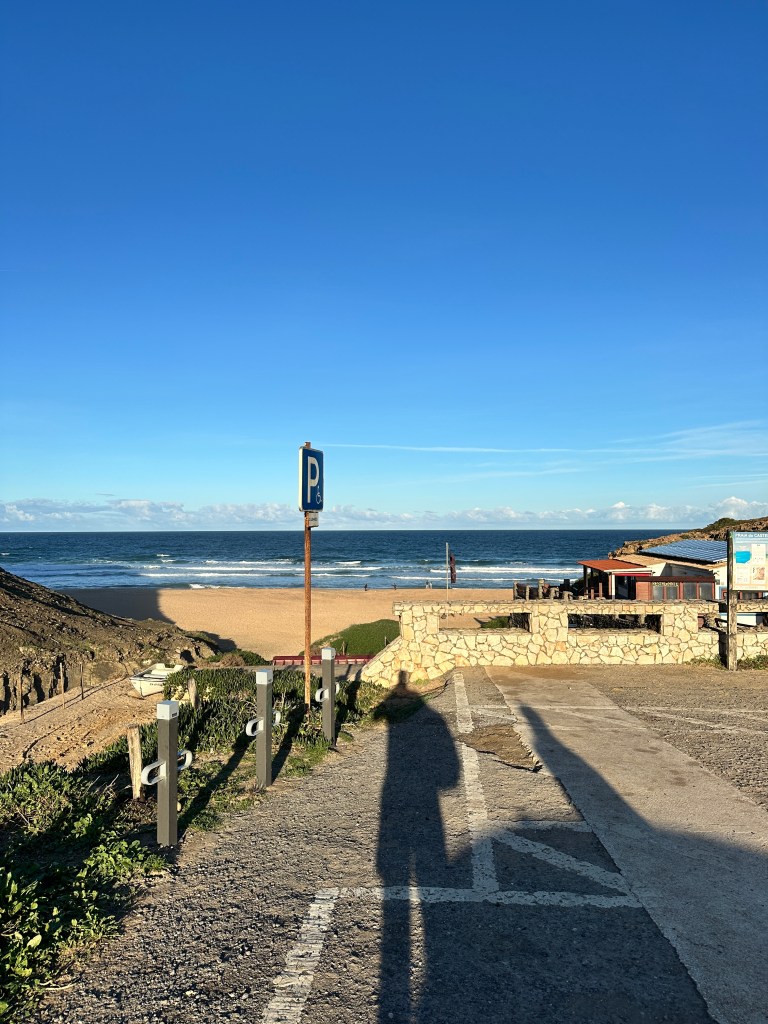

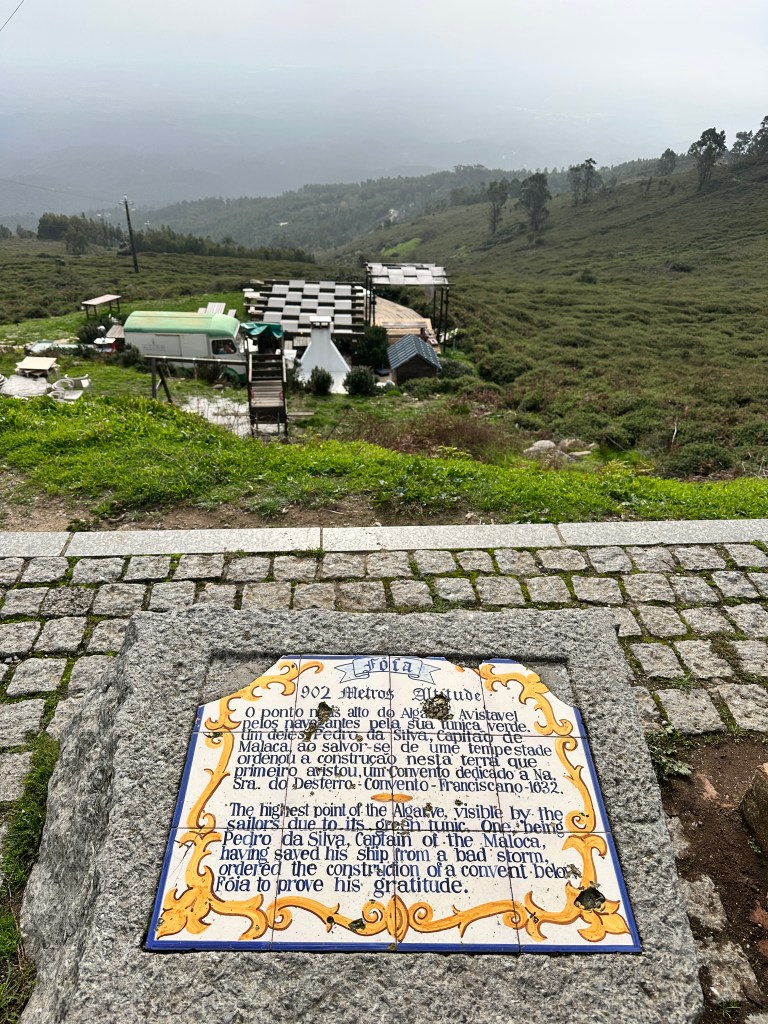
(TOP TEN LIST – PRACTIAL TRAVELLING TIPS FOR FAMILIES)
Here’s a top-10 list of practical travelling tips tailored for Canadian families with older-aged teenagers (e.g., 15-19 years old) planning an 8-day trip to Portugal. Portugal is an excellent European destination for families—compact, safe, walkable cities with history and culture, stunning beaches for surfing/relaxing, great food, and teen-friendly activities like street art, tuk-tuks, boat rides, and outdoor adventures. It’s family-oriented, with locals welcoming kids of all ages.
- Choose shoulder season for the best balance — Aim for May-June or September-October (avoid peak July-August crowds/heat, especially in the Algarve). Weather is warm (20-28°C), beaches swimmable, fewer tourists, and lower prices. For teens, this means more enjoyable exploration without overwhelming heat or lines. Book flights/hotels early—direct or one-stop from Calgary to Lisbon (LIS) or Porto (OPO) via Air Canada, WestJet, Porter, or partners (often CAD 600-1000+ round-trip).
- Focus on a realistic 8-day itinerary: Lisbon base + day trips or add Porto — With only 8 days, base in Lisbon (4-5 nights) for its vibrant energy, trams, street art, and nearby beaches/Sintra. Add 2-3 nights in Porto (train ~3 hours, scenic and affordable) or the Algarve for beaches/surfing if teens crave relaxation. Sample: Days 1-5 Lisbon/Sintra/Cascais; Days 6-8 Porto or Algarve. Minimize moves—teens appreciate downtime over constant travel.
- Handle entry requirements and prep documents — Canadians need a passport valid 3+ months beyond departure (no visa for up to 90 days in Schengen). Note: ETIAS (online authorization, ~€7, valid 3 years) launches late 2026—apply in advance once available. For teens traveling (even with parents), no special minor rules usually apply, but carry proof of relationship if asked. Notify banks of travel to avoid card blocks; use contactless/Apple Pay widely.
- Pack for varied weather, hills, and teen style — Bring layers (light jackets for evenings/windy coasts), comfy walking shoes (cobblestones/hills everywhere—Lisbon is very hilly), swimsuits/rash guards for beaches, sunscreen, reusable water bottles (tap water safe), portable chargers (long walking days), and light backpacks. Teens: pack trendy casual clothes for city vibes and Instagram spots (e.g., LX Factory in Lisbon).
- Use efficient public transport and rent a car strategically — In cities, rely on trams, metro, Uber/Bolt (cheap/safe), or tuk-tuks (fun for teens!). For day trips (Sintra, Cascais beaches) or Algarve, rent a car (international permit recommended; automatic if needed). High-speed train Lisbon-Porto is comfy and scenic—book ahead. Teens love independence—give them city transport apps for solo explorations within safe bounds.
- Prioritize teen-engaging activities for buy-in — Mix culture with fun: Sintra’s fairytale palaces (Pena Palace hikes/photos), Lisbon’s Oceanário (huge aquarium), tuk-tuk tours, street art hunts, surfing lessons in Cascais/Ericeira or Algarve, boat rides on Douro River (Porto), or beach days with sea caves/kayaking. Let teens choose some (e.g., surfing vs. more museums)—they’ll engage more.
- Budget smartly—Portugal is affordable but add up — Cheaper than many Western Europe spots: meals €10-20/person (pastéis de nata, grilled fish, bifanas), family attractions €10-20 each. Expect €100-200/day for family of four (food/transport/entries). Book family rooms/apartments via Airbnb or hotels (e.g., in Bairro Alto Lisbon or Ribeira Porto). Use grocery stores for snacks/picnics to save—teens eat a lot!
- Embrace food and dining culture — Portuguese food is teen-friendly: fresh seafood, grilled meats, fries, custard tarts. Try family-style sharing plates. Dinner late (8-10 PM), but many spots open earlier. Hydrate—bring water bottles. For picky eaters, cities have international options (pizza, burgers). Cooking classes or food tours can be a hit with older teens.
- Stay connected and safe — Get an EU eSIM or cheap local SIM for data (Google Maps, WhatsApp family check-ins). Portugal is very safe, but watch pickpockets in tourist crowds (Lisbon trams, Porto riverside). Set meet-up spots for when teens want independence (e.g., explore nearby streets). Download offline maps and translation apps.
- Balance adventure, culture, and chill for memorable 8 days — Alternate active days (hiking Sintra, surfing, city walks) with relaxed ones (beach lounging, sunset Douro cruise, or cafe-hopping). Walk everywhere for hidden gems—Portugal’s charm is in the details. End with downtime to avoid burnout. It’s perfect for family bonding: history for parents, cool vibes/photos/adventures for teens.
Have an incredible trip!
 michaelandrewpalmer.com